Have you ever heard someone say “I’m reading a book on anti-gravity — it’s impossible to put down” and found yourself laughing despite your better judgment? Or maybe you’ve groaned at a dad joke so terrible it circled back to being brilliant. That, my friends, is the power of a pun. But if someone asked you “what is a pun?” could you give them a clear answer? Probably not — and that’s exactly why we’re here.
In this comprehensive guide, we’ll explore everything you need to know about puns. From the simple definition to the psychology behind why they make us laugh (or groan), from classic examples to the different types of wordplay, we’ve got you covered. Whether you’re a language lover, a teacher, a writer, or just someone who’s always wondered why dad jokes are so universally loved and hated, you’ve come to the right place.
📚 What Is a Pun? The Simple Definition
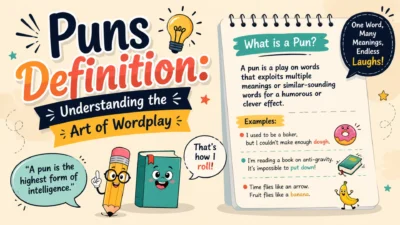
So, what is a pun? At its core, the answer is simple: a pun is a play on words that exploits multiple meanings or similar sounds for humorous or rhetorical effect.
The word “pun” itself comes from the Italian word “puntiglio,” meaning “fine point” or “quibble” — which perfectly captures the clever, sharp nature of wordplay. According to the Oxford Dictionary, a pun is “a joke exploiting the different possible meanings of a word or the fact that there are words that sound alike but have different meanings.”
The Greek term for pun is “paronomasia,” and other names include calembour, clinch, quibble, and carwitchet. Whatever you call them, puns have been around for centuries — they were popular in ancient Roman plays and medieval Sanskrit poetry, and they continue to be a staple of humor today.
🎯 How Puns Work: The Mechanics Behind the Laugh
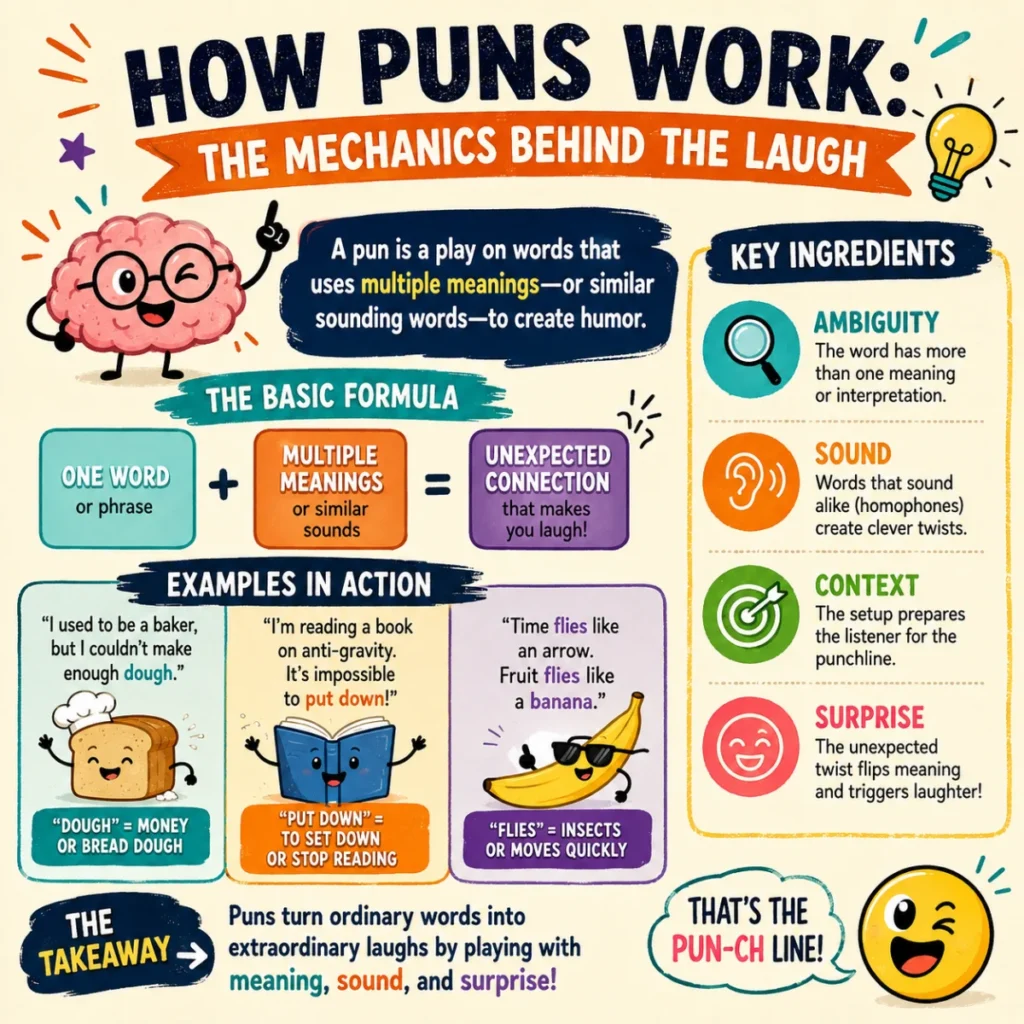
If you’re still wondering “what is a pun?” the best way to understand is to look at how they work. Puns create humor through incongruity: they combine words or ideas in unexpected ways.
When our brain expects one meaning and gets another, it creates a moment of surprise that triggers laughter. This surprise element is what makes puns so effective — and so groan-worthy.
Here’s the breakdown of what happens when you hear a pun:
- Setup: You hear a word or phrase that sets up an expectation
- Surprise: The punchline reveals a different meaning or similar-sounding word
- Resolution: Your brain connects the two meanings, and you laugh (or groan)
Puns are a form of intellectual humor — they show linguistic agility and creativity. Even Samuel Johnson famously called puns “the lowest form of humor,” yet they remain one of the most popular forms of wordplay.
A quick pun to test this theory:
- “What do you call a fake noodle?” An impasta! (The setup is noodles. The surprise is “impasta” instead of “imposter.” Your brain connects pasta and imposter — and you either laugh or groan.)
🔍 Types of Puns (With Examples)
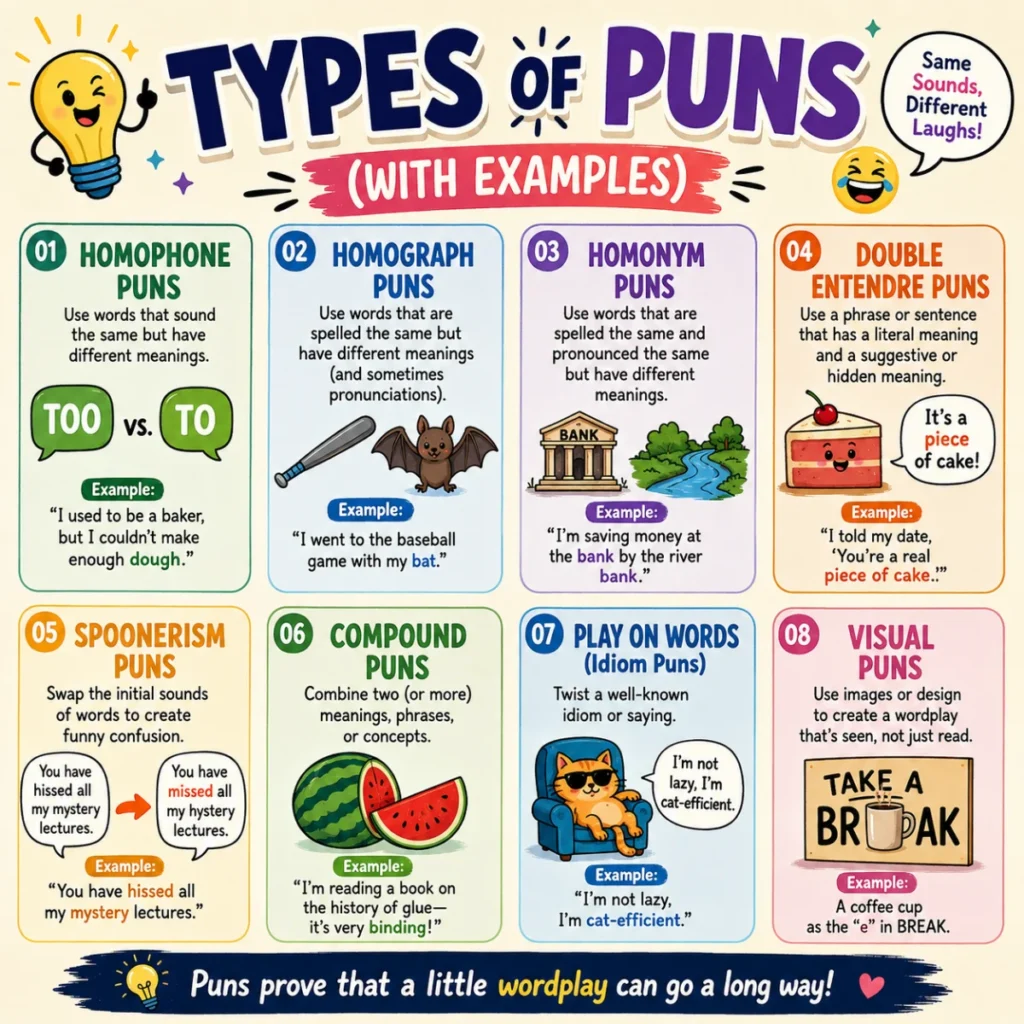
Understanding what is a pun also means knowing the different types of wordplay. Here are the main categories with examples:
1. Homophonic Puns
Homophonic puns use words that sound the same but have different meanings.
- Example: “Why is it so wet in England? Because many kings and queens have reigned there.” (reigned/rained)
- Example: “You can tune a guitar, but you can’t tuna fish.”
2. Homographic Puns
Homographic puns use words that are spelled the same but have different meanings.
- Example: “Time flies like an arrow; fruit flies like a banana.”
3. Substitution Puns
Substitution puns rely on substituting a similar-sounding word with a different meaning.
- Example: “Puns are a low form of humor, but I think poetry is verse.” (verse/worse)
4. Double Meaning Puns
Double meaning puns use words that have more than one meaning.
- Example: “What did the boss say when he sold the carnival? It was a fair deal.” (fair = carnival OR fair = equal)
5. Compound Puns
Compound puns contain more than one pun in the same sentence.
- Example: “Never scam in the jungle; cheetahs are always spotted.”
📖 Classic Pun Examples
Here are some classic examples that perfectly illustrate what is a pun:
Food Puns:
- “I work as a baker because I knead dough.” (knead/need; dough/money)
- “What do you call fake spaghetti? An impasta.”
- “I donut know what I’d do without you.”
Animal Puns:
- “What do you call a sleeping bull? A bulldozer.”
- “What do you call an alligator in a vest? An investigator.”
- “I’m not kitten around.”
Everyday Puns:
- “She had a photographic memory but never developed it.”
- “Broken pencils are pointless.” (pointless = no point OR needless)
- “Money down the drain.” (drain = sink drain OR wasted money)
Classic One-Liners:
- “Why don’t skeletons fight each other? They don’t have the guts.”
- “What’s orange and sounds like a parrot? A carrot.”
- “Why did the bicycle fall over? It was two-tired.”
📚 Puns in Literature and Popular Culture
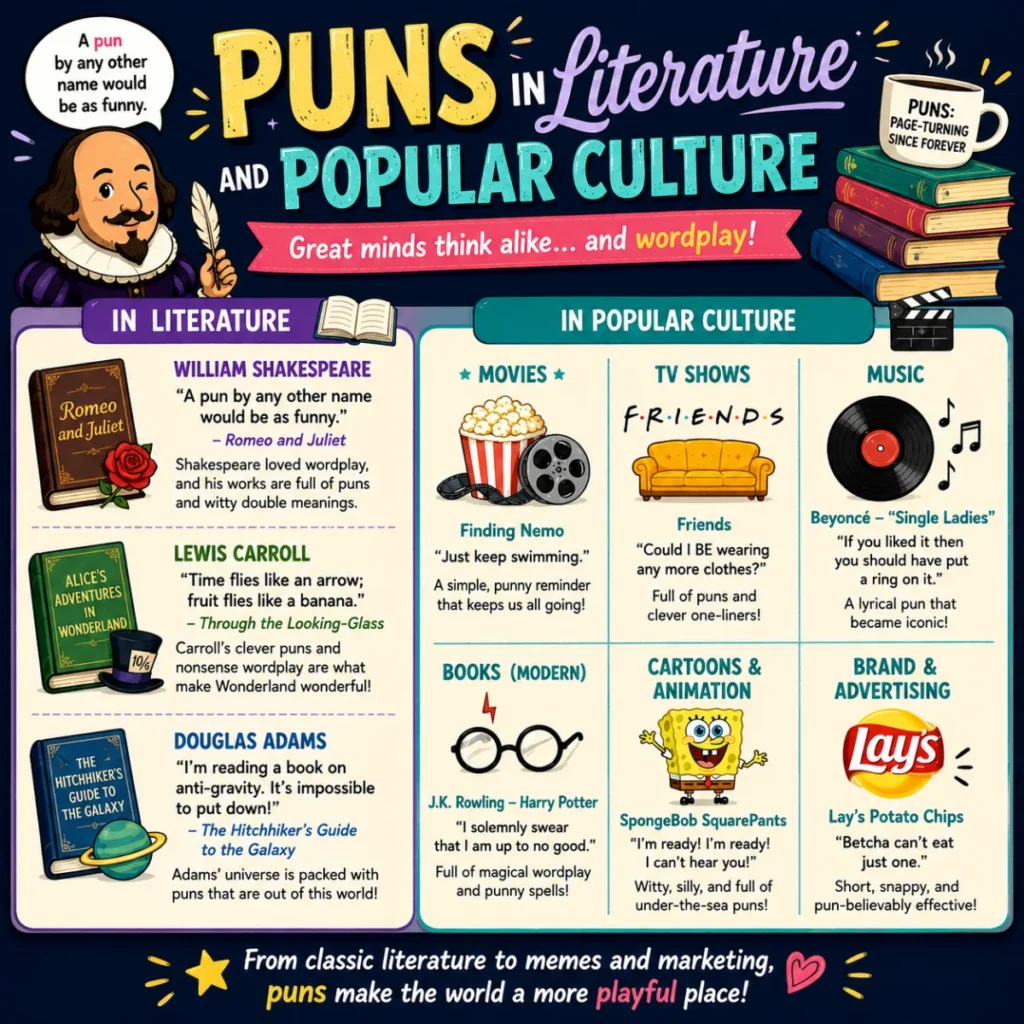
Puns aren’t just for dad jokes — they’ve been used by famous authors for centuries. If you want to understand what is a pun, looking at how masters use them is essential:
William Shakespeare, Romeo and Juliet:
“Being but heavy, I will bear the light.” (heavy = weight OR sadness; light = torch OR not heavy)
Lewis Carroll, Alice’s Adventures in Wonderland:
“‘Mine is a long and a sad tale!’ said the Mouse. ‘It is a long tail, certainly,’ said Alice.” (tale/tail)
Oscar Wilde, The Importance of Being Earnest:
The title itself is a pun — “Earnest” plays on the name Ernst and the word “earnest” meaning sincere.
The Simpsons:
The show’s use of “Krusty the Clown” and “Sideshow Bob” demonstrates how puns create memorable character names.
Dr. Seuss:
His playful use of language in books like “The Cat in the Hat” and “Green Eggs and Ham” shows how puns delight children and adults alike.
💡 Why Do Puns Make Us Laugh (or Groan)?
Now that you know what is a pun, let’s dive into the psychology behind them. Puns work because of incongruity: they combine words or ideas in unexpected ways.
When our brain expects one meaning and gets another, it creates a moment of surprise that triggers laughter.
But why do we groan? The groan is actually part of the fun. It’s a sign that the pun was so clever (or so terrible) that it demands a reaction. Puns are a form of intellectual humor — they show linguistic agility and creativity.
Fun fact: Even Samuel Johnson famously called puns “the lowest form of humor,” yet they remain one of the most popular forms of wordplay.
🎓 Why Puns Are Good for Learning
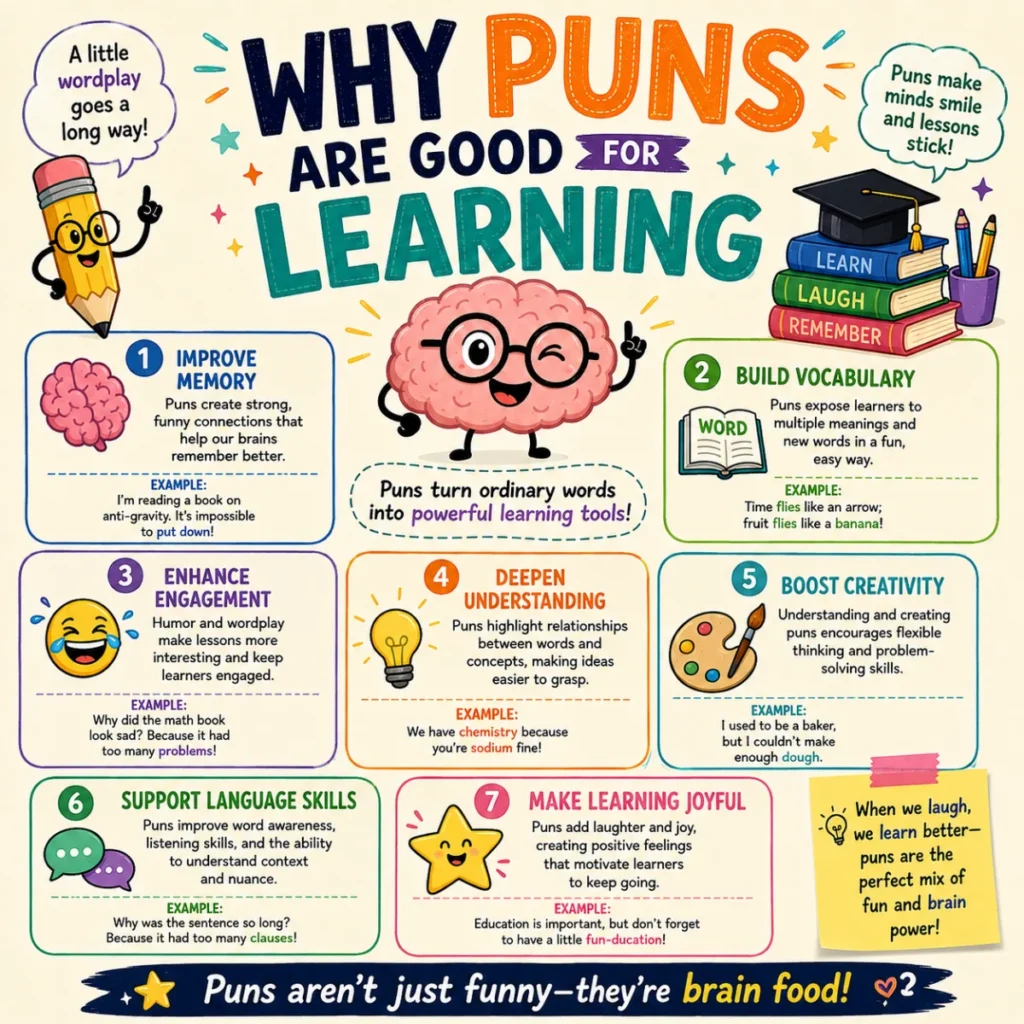
Understanding what is a pun is also valuable for language learning and education:
- Vocabulary building: Puns help students understand multiple meanings of words.
- Phonemic awareness: Homophonic puns reinforce sound-letter relationships.
- Creative thinking: Creating puns requires flexible, associative thinking.
- Classroom engagement: Kids love groan-worthy puns, making them great teaching tools.
💡 Pro Tips: How to Create Your Own Puns
Now that you know what is a pun, it’s time to create your own! Here’s how:
1: Find a word with multiple meanings.
- Example: “bark” (tree covering OR dog sound)
2: Create a context that sets up one meaning.
- “Why did the tree go to the vet?”
3: Swap to the other meaning for the punchline.
- “Because it had a bad bark!”
4: Practice!
- The best puns take practice. Keep experimenting!
FAQs
What is a pun in simple terms?
A pun is a play on words that uses similar sounds or multiple meanings for humorous effect.
What is the difference between a pun and a joke?
All puns are jokes, but not all jokes are puns. Puns specifically rely on wordplay — sounds, meanings, or spelling — whereas other jokes may rely on situations, timing, or surprise.
What is the official term for puns?
The official technical term for a pun is paronomasia, which comes from the Greek word “paronomazein” meaning “to make a change in a name.”
Are puns considered good humor?
This is debated! Some call puns “the lowest form of humor,” while others see them as clever intellectual wordplay. In reality, they’re both — a well-crafted pun shows linguistic skill, but it’s also meant to be light and silly.
Why do puns make us groan?
The groan is a playful reaction to the pun’s cleverness — it’s a sign that the pun was effective, just in a cheesy way. Groaning is part of the fun!
Conclusion
So there you have it — the complete guide to what is a pun. Puns are more than just dad jokes (though they’re great for those too). They’re a fascinating linguistic phenomenon that plays with sounds, meanings, and our expectations. Whether you love them or hate them, puns are a testament to the flexibility and fun of language.
Now that you understand what is a pun, you’ll start noticing them everywhere — in advertisements, book titles, movie names, and everyday conversations. And the best part? You can now create your own! So go ahead, experiment with wordplay, and don’t be afraid to make people groan. After all, a pun a day keeps the boredom away — or at least gives you something to laugh about.

Hamid Mahmood is the creator and author behind Pickupuns, sharing funny pickup lines, clever puns, and viral humor to make the internet a little more entertaining.